
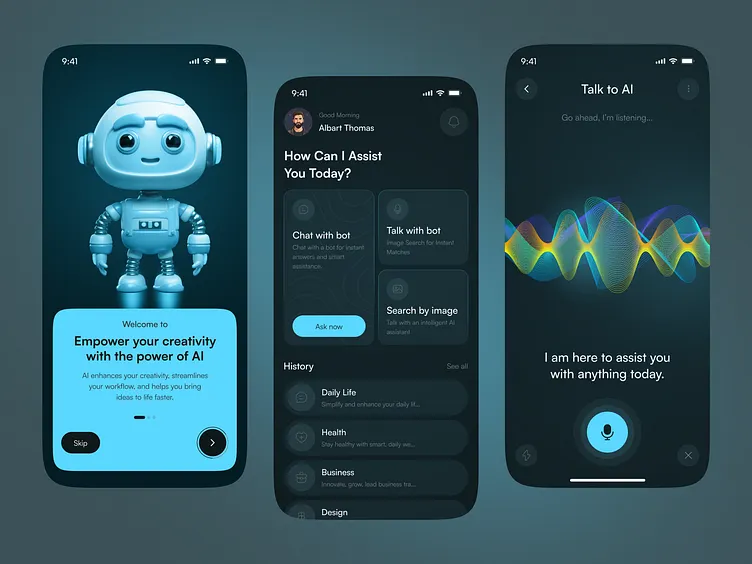
The mobile app industry is evolving faster than ever before. With advancements in artificial intelligence, cloud computing, and user experience design, businesses are no longer asking whether they need a mobile app but how advanced it should be.
In 2026, mobile apps are not just tools they are intelligent ecosystems that drive business growth, customer engagement, and operational efficiency. Whether you’re a startup, enterprise, or digital marketing agency, staying updated with the latest app development trends is crucial to remain competitive.
In this comprehensive guide, we’ll explore the top mobile app development trends in 2026 that are shaping the future and how you can leverage them to grow your business.
Artificial Intelligence (AI) is no longer optional it’s a necessity. In 2026, AI is deeply integrated into mobile applications, enhancing both functionality and user experience.
AI helps apps understand user behavior, predict needs, and deliver real-time solutions. This leads to higher engagement and retention rates.
Apps like Netflix and Amazon use AI to recommend content/products based on user preferences.
Takeaway:
If your app isn’t leveraging AI, you’re already behind your competition.
Super apps are platforms that offer multiple services in a single application. Instead of downloading separate apps, users prefer an all-in-one solution.
Apps like WeChat and Grab have already proven the success of this model.
Takeaway:
Businesses should think beyond single-purpose apps and aim for multi-functional ecosystems.
The global adoption of 5G is revolutionizing mobile app capabilities.
Developers can now build high-performance apps with features like:
Takeaway:
Apps optimized for 5G will outperform competitors in speed and user experience.
IoT is connecting mobile apps with smart devices like wearables, home automation systems, and industrial machines.
Takeaway:
IoT-enabled apps are opening new opportunities in healthcare, real estate, and manufacturing sectors.
AR and VR are no longer limited to gaming they are transforming industries like retail, education, and healthcare.
These technologies provide immersive user experiences, increasing engagement and conversions.
Takeaway:
AR/VR can give your app a strong competitive advantage in user experience.
With increasing cyber threats, users are more concerned about data security than ever before.
A secure app builds trust and credibility, which directly impacts user retention.
Takeaway:
Security should be a priority, not an afterthought.
Cloud technology allows apps to store and process data on remote servers instead of local devices.
Apps like Google Drive and Dropbox use cloud technology for seamless data access.
Takeaway:
Cloud integration ensures your app is scalable and future-ready.
Low-code and no-code platforms are making app development faster and more accessible.
Takeaway:
This trend is democratizing app development and enabling faster innovation.
PWAs combine the best features of websites and mobile apps.
Takeaway:
PWAs are a great alternative for businesses looking for quick and affordable solutions.
Data is the new fuel for mobile apps. In 2026, apps are using big data to deliver hyper-personalized experiences.
Takeaway:
Personalization is key to retaining users in a competitive market.
Digital payments are growing rapidly, and mobile apps are integrating seamless payment solutions.
Users prefer fast, secure, and contactless transactions.
Takeaway:
Integrating payment solutions can significantly improve user experience and revenue.
Businesses want apps that work on both Android and iOS without doubling development costs.
Takeaway:
Cross-platform apps are becoming the go-to choice for modern businesses.
Voice search and voice assistants are becoming more popular with users.
It improves accessibility and provides a frictionless user experience.
Takeaway:
Voice-enabled apps are the future of user interaction.
From food delivery to ride-sharing, on-demand apps are dominating the market.
Takeaway:
On-demand business models are highly profitable and scalable.
Blockchain is enhancing transparency and security in mobile applications.
It reduces fraud and increases trust in digital transactions.
Takeaway:
Blockchain is a game-changer for fintech and security-focused apps.
Not every trend will suit your business. Here’s how to choose the right one:
Know your users’ needs and preferences.
Are you focusing on engagement, revenue, or scalability?
See what technologies your competitors are using.
Build a minimum viable product and scale gradually.
The future of mobile apps is all about:
Businesses that adapt to these trends will not only survive but thrive in the competitive digital landscape.
Mobile app development in 2026 is no longer just about coding it’s about creating smart, scalable, and user-centric solutions.
From AI-powered personalization to 5G-enabled performance and blockchain security, the trends discussed above are shaping the future of the industry.
If you want your app (and your business) to succeed, you must:
Final Thought:
The companies that embrace these trends today will become the market leaders of tomorrow.
AI-powered applications are the most important trend due to their ability to enhance user experience and automation.
Yes, for most businesses, cross-platform apps are cost-effective and faster to develop.
5G improves speed, reduces latency, and enables advanced features like AR/VR and real-time processing.
Healthcare, eCommerce, education, fintech, and logistics benefit the most.
Yes, with the right strategy and features, mobile apps remain highly profitable.