

Creating a solid digital marketing plan is like having a map for your online journey. It stops you from wandering aimlessly and helps you get where you want to go, which is usually more customers and sales. We’ll break down how to make a plan that actually works, connecting what you want to do with how you’ll actually do it.
So, you’re thinking about getting serious with your online marketing? That’s smart. A digital marketing plan isn’t just some fancy document to gather dust; it’s basically your roadmap for making sure all your online efforts actually lead somewhere useful for your business. Without one, it’s like setting sail without a compass – you might end up somewhere, but probably not where you intended. It helps keep things organized, makes sure your marketing isn’t just doing its own thing but is actually working towards what the business needs to achieve. Think of it as the blueprint before you start building.
It’s about making sure your marketing activities are pointed in the right direction and actually help the company grow.
Here’s why having this plan is a big deal:
A plan helps you make smarter choices because you know what you’re aiming for. It cuts down on the guesswork and makes your marketing work harder for you.
This is where things get really practical. A lot of marketing plans get stuck in the weeds, focusing on things like likes or clicks. But what really matters is how those online activities help the actual business. Are you trying to sell more products? Get more people to sign up for something? Expand into a new area? Your digital marketing plan needs to answer these questions first. You can’t just pick a social media platform because it’s popular; you need to know if it’s going to help you hit those bigger business targets. It’s about making sure every campaign, every post, every ad is working towards a real business outcome, not just looking busy.
For example, if your main business goal is to increase the number of qualified leads for your sales team, your digital marketing plan should focus on channels and content that attract those kinds of people. It’s not about getting a million views if those views aren’t from potential customers. This connection is key to making your marketing budget count. You can find more details on how to build this connection in a step-by-step approach.
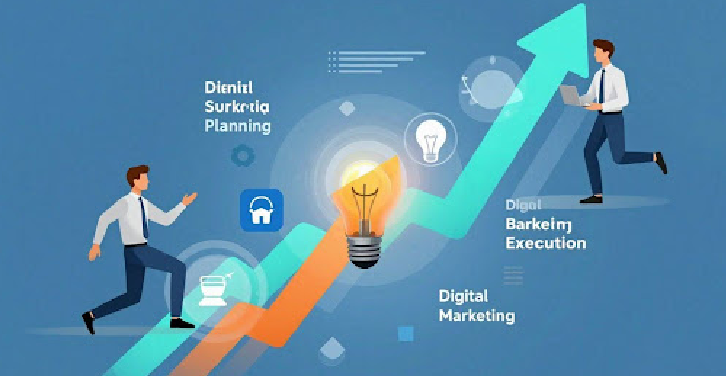
People often mix up strategy and execution, but they’re different parts of the same puzzle. Think of strategy as the ‘what’ and ‘why’ – what are we trying to achieve, and why are we doing it this way? It’s the big picture, the high-level goals. Execution, on the other hand, is the ‘how’ – how are we going to make it happen? This is where the day-to-day actions, the specific campaigns, the content creation, and the channel management come in. A strategy might say, ‘We need to increase brand awareness among young professionals.’ The execution would then involve deciding which social media platforms to use, what kind of content to create (like short videos or informative articles), and how often to post it. The plan bridges this gap, detailing the strategic direction and then outlining the specific actions needed to bring that strategy to life. It’s the bridge that connects your big ideas to the actual work that gets done.
Okay, so you’ve got the big picture of your business goals. That’s great. But how do you actually turn that into marketing that works? It all starts with getting super clear on what you want to achieve and who you’re trying to reach. Without this, your marketing efforts can feel like throwing darts in the dark – you might hit something, but probably not what you were aiming for.
Let’s talk goals. Just saying

Picking the right places to put your marketing energy is a big deal. It’s not about being everywhere; it’s about being where it counts for your business. Think about it like this: if you’re selling handmade birdhouses, you probably don’t need to spend a ton of money on LinkedIn ads. You’d be better off focusing on local gardening groups or craft fair websites. The goal is to connect with people who actually want what you’re selling, not just anyone who happens to scroll by.
So, how do you figure out where to focus? Start by looking at your business goals. Are you trying to get more people to buy something right away? Or are you more focused on building a name for yourself over time? Different goals need different channels. For example, if you need sales fast, paid ads on search engines might be your best bet because people searching for your product are usually ready to buy. If you’re building a brand, maybe social media and content marketing are better for getting your name out there and building a following.
Here’s a quick look at how some channels might fit different goals:
It’s really about matching the channel to the customer’s journey and your specific business needs.
Once you know where you want to be, you need something to say. Content is what fills those channels. It’s not just about posting randomly; it’s about creating things people actually want to see or read. Think about what your potential customers are trying to figure out at different stages. Are they just realizing they have a problem? Are they looking at different solutions? Or are they ready to pick one?
Creating content that fits where someone is in their buying process makes them more likely to move forward. It shows you understand their needs and aren’t just trying to sell them something.
Finally, when you get someone interested, you need a place to send them that makes it easy to take the next step. That’s where landing pages come in. A landing page is a specific page on your website designed for one thing: getting a visitor to do something, like sign up for a newsletter, download a guide, or make a purchase. It’s not your homepage; it’s focused. It should have a clear headline, a brief explanation of the offer, and a simple form or button to complete the action.
Making sure your landing pages work well means testing different headlines, images, and calls to action to see what gets the best results. It’s about making it as simple as possible for someone to go from interested to converted.
Okay, so you’ve put together a plan, picked your channels, and started putting stuff out there. That’s awesome! But how do you know if any of it is actually working? This is where measuring performance comes in. It’s not just about looking at numbers; it’s about seeing what’s helping your business grow and what’s just… well, noise.
Think of Key Performance Indicators (KPIs) as your report card for marketing. They tell you how you’re doing against your goals. You don’t want to track everything, though. That’s like trying to study for ten tests at once – you’ll just get overwhelmed. Instead, pick a few that really matter for your business. For example, if your main goal is to get more people to buy something, you’ll want to track things like conversion rates (how many people who visit your page actually buy) and cost per acquisition (how much you spend to get one customer).
Here are some common KPIs to consider:
You need to know what success looks like before you start. If you don’t have clear goals, you can’t possibly measure if you’re hitting them. It’s like trying to hit a target you can’t see.
Once you’re tracking your KPIs, you need to actually look at the data. Don’t just let it sit there! Look at it regularly, maybe every couple of weeks. See what trends you can spot. Are certain ads bringing in more sales? Is one social media platform way more popular with your audience than another? This analysis helps you figure out what’s working well and what’s not. If something isn’t performing, don’t be afraid to tweak it or even stop doing it. Marketing isn’t set in stone; it’s about making smart adjustments based on what the numbers tell you.
This is where the rubber meets the road. After you’ve analyzed your performance, you’ll have a better idea of where your marketing money and time are best spent. If you see that your email marketing is bringing in a lot of sales for a low cost, maybe it’s time to put a bit more into that. On the flip side, if you’re spending a ton on ads that aren’t leading to sales, you might want to pull back on that spending. The goal here is to make sure your resources – your budget, your team’s time, your tools – are all pointed towards the activities that give you the best bang for your buck. It’s all about making your marketing work harder for you.
Keeping your brand’s message and feel the same everywhere is super important. It’s not just about looking good; it’s about building trust. When people see your logo or read your words, they should instantly know it’s you, no matter where they are – on your website, social media, or an email. This consistency helps people feel more comfortable with your business.
Think of your brand voice as your personality. Is it friendly and casual, or more formal and professional? Whatever it is, stick to it. This means everyone on your team, or anyone creating content for you, needs to be on the same page. It’s like having a family member tell a story; you recognize their style even if you didn’t see them.
A consistent brand voice makes your business feel more reliable. It shows you’ve thought things through and that you care about how you present yourself to the world. This careful attention to detail can make a big difference in how people perceive your company.
We all have limited time and money, right? So, it makes sense to focus on what works best. Instead of trying to do everything, figure out which marketing activities give you the most bang for your buck. This means looking at your data and seeing which channels bring in the most customers or leads. It’s about working smarter, not just harder.
Here’s a simple way to think about it:
This approach helps you avoid wasting resources on things that aren’t really moving the needle. It’s about making sure your marketing budget is spent wisely, leading to better results without needing a bigger budget. For instance, understanding branded queries in tools like Google Search Console can help you see what’s working specifically for your brand name.
Brand consistency and efficiency aren’t just about today; they’re about building for the future. When your marketing is consistent and efficient, it creates a strong foundation. This makes it easier to grow over time because people already know and trust you. It also means your marketing efforts can adapt as your business changes, always working towards those bigger goals. It’s about creating a system that supports steady, sustainable growth, rather than just quick wins.
So, we’ve talked a lot about making a digital marketing plan. It’s not just about writing things down, though. The real work starts when you actually do the things you planned. Remember, a plan is just a guide. You need to make sure your marketing efforts are actually helping your business reach its goals, not just looking busy. Pick the right places to focus your energy, the ones that make sense for your business and your customers. Keep an eye on what’s working and what’s not, and don’t be afraid to change things up. That’s how you get real results.
Think of a digital marketing plan like a roadmap for your business online. It helps you figure out the best ways to use the internet to reach people, tell them about what you offer, and get them interested in buying. It keeps all your online efforts organized so you don’t waste time or money.
Having a plan is super important because it gives you clear goals and a path to follow. Without one, your marketing efforts can get messy and scattered, like trying to find your way without a map. A plan helps you know who you’re talking to and what you want them to do, making your marketing much more effective.
You track it! A good plan includes specific things to measure, like how many people visit your website or how many actually buy something. By looking at these numbers regularly, you can see what’s going well and what needs to be changed to get better results.
A strategy is like the big idea – what you want to achieve overall and why. A plan is the detailed step-by-step guide on how you’ll actually do it, including which tools you’ll use, what you’ll say, and when you’ll do it. The plan brings the strategy to life.
You should choose the online places where your ideal customers hang out. Don’t just pick popular ones! Think about where your target audience spends their time and which places will help you best reach your specific business goals, like getting more sales or making more people aware of your brand.
SMART goals are a way to set goals that are easy to understand and track. They need to be Specific (what exactly you want to do), Measurable (how you’ll count it), Achievable (can you actually do it?), Relevant (does it matter for your business?), and Time-bound (by when?). Using SMART goals makes sure your marketing efforts are focused and you know if you’re succeeding.